 ReshapeGuide
Breast plastic surgery: implants, lifts and reductions
Updated
Breast surgery can make breasts bigger, smaller, higher or more even, take implants out or rebuild a breast after cancer. Here's what each operation does, what the FDA says about implants, what surgeons charge and when to time it around pregnancy.
Short answer
Breast plastic surgery covers augmentation (with implants or your own fat), breast lifts, breast reductions, implant removal, male breast reduction and reconstruction after mastectomy. In 2025, US plastic surgeons performed an estimated 304,234 augmentations and implant revisions, 156,131 breast lifts and 76,040 breast reductions. The FDA warns that implants aren't lifetime devices and that some complications need more surgery.
The types of breast surgery
Breast surgery isn’t one operation. Each type solves a different problem, and many people end up combining two. Here’s the whole category side by side, with how often each was done in the US in 2025 and what surgeons charge on average.
| What it does | Procedures in 2025 | Average surgeon fee | |
|---|---|---|---|
| Augmentation | Adds size with implants or your own fat | 304,234 implant augmentations and revisions (+11%) | $4,875 with implants, $5,719 with fat |
| Breast lift | Raises and reshapes sagging breasts | 156,131 (+8%) | $6,816 |
| Breast reduction | Removes tissue and skin to make breasts smaller | 76,040 (+7%) | No current ASPS average; often billed to insurance |
| Implant removal | Takes implants out, often with the scar capsule | 45,773 (augmentation patients; no change) | $3,979 |
| Male breast reduction | Removes enlarged breast tissue in men | 23,318 (−8%) | $5,587 |
| Reconstruction | Rebuilds a breast after mastectomy | 159,140 (+10%) | Covered by most plans that cover mastectomy; deductibles apply |
Counts are national estimates from the American Society of Plastic Surgeons (ASPS) 2025 statistics; the augmentation figure includes implant revisions, and the reconstruction figure comes from insurance claims. Fees are ASPS’s latest published averages and cover the surgeon only: anesthesia, the operating room and other costs come on top. For how breast surgery compares with face and body procedures, see the overview of plastic surgery types.
Breast augmentation
Augmentation increases breast size, restores volume lost after pregnancy or weight loss, or evens out breasts of different sizes. It’s done in two ways:
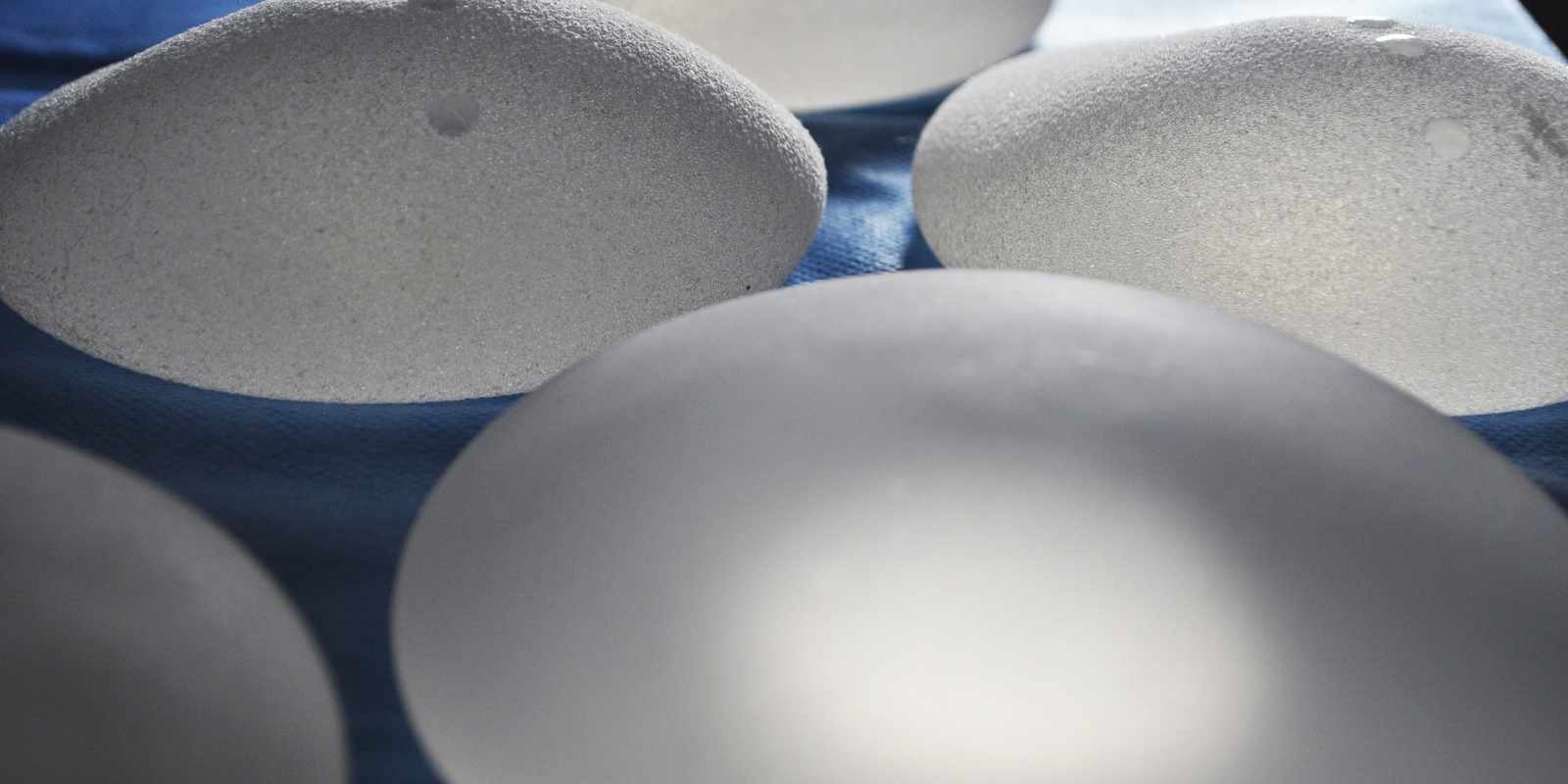
- Implants are a silicone shell filled with salt water (saline) or silicone gel. Your surgeon chooses the size, shape, surface and placement with you.
- Fat transfer moves your own fat, taken by liposuction from another part of the body, into the breasts. It avoids an implant, but ask what size change is realistic; ASPS’s average fee is higher, at $5,719 against $4,875 for implants.
What patients ask for is changing. In ASPS’s 2025 survey, 36% of member surgeons said patients had moved toward smaller implants and 12% toward larger ones, while 52% saw no change. Implants of 300 to 400 cc were the size surgeons used most, followed by 200 to 300 cc.
Augmentation alone doesn’t fix sagging. ASPS notes it “does not correct severely drooping breasts” and points to a lift for that, with or without implants.
Breast lift, with or without implants
A breast lift (mastopexy) removes stretched skin and moves the nipple and breast tissue higher. ASPS lists the usual signs it’s the right operation: nipples that sit below the breast crease when unsupported, nipples and areolas that point downward, stretched skin and enlarged areolas, or one breast lower than the other. ASPS names pregnancy, breastfeeding, weight changes, aging, gravity and heredity as causes.
ASPS says a lift “does not significantly change the size of your breasts or round out the upper part of your breast.” It suggests a lift combined with augmentation if you want fuller breasts, or a lift combined with reduction if you want smaller ones. Some surgeons are seeing more of them. “I’m seeing more breast lifts with augmentation, too,” Chicago plastic surgeon Sara Dickie, MD, told ASPS for its 2025 report. Ask how the combined operation changes your scars and recovery.
Breast reduction, and when insurance pays
A breast reduction removes skin and breast tissue, then reshapes and lifts what’s left. ASPS describes the typical candidate as someone whose breast size limits physical activity or causes back, neck and shoulder pain, grooves from bra straps or skin irritation under the breast crease.
Because it treats physical symptoms, insurance sometimes pays for a reduction, but plans set strict rules. Aetna’s policy, last reviewed in March 2026, shows the kind of rules insurers set; other plans’ criteria differ:
- Symptoms in at least two areas (such as headaches, neck, shoulder or upper back pain, bra-strap grooves or skin breakdown) for at least a year.
- Pain that has continued through at least three months of other treatment, such as pain relievers, physical therapy, supportive bras or a supervised weight-loss program.
- Photos documenting the size of the breasts, and for women 50 and over, a clear mammogram within the past two years.
- A surgeon’s estimate that at least a set weight of breast tissue will come out of each breast, scaled to body size, or more than 1 kg per breast regardless of size.
The weight rule can clash with the result you want: a surgeon may judge that a smaller reduction suits your frame better than the minimum your insurer requires. Ask your surgeon and your plan how they handle that before you’re scheduled, and if a claim is denied, ask exactly which criterion wasn’t met.
Implant removal (explant)
Implant removal takes out implants from an augmentation or reconstruction, and often the capsule of scar tissue the body forms around them. ASPS says people choose it for capsular contracture (hardening of the breast), pain, a leak or rupture seen on imaging, or simply because they no longer want implants. Others exchange them for a different size at the same time. Removals among augmentation patients held steady in 2025 at 45,773, which ASPS reads as evidence that the shift to smaller implants isn’t driven by people taking theirs out.
Ask your surgeon how your breasts are likely to look once the implants are out, and whether a lift in the same operation makes sense for you. The FDA notes that some patients with systemic symptoms report they went away after their implants were removed without replacement; it hasn’t established that removal helps everyone. If you’re having implants removed because of symptoms, say so at the consultation and ask whether the surgeon plans to remove the capsule too.
Male breast reduction (gynecomastia surgery)
Gynecomastia surgery removes enlarged breast tissue, excess fat or both from a man’s chest. ASPS says good candidates are men whose condition can’t be corrected with other medical treatment, whose breast development has stabilized and who are at a relatively stable, normal weight. It adds that teenagers may benefit, though they may need another operation later if breast development continues.
ASPS also looks at the cause: if gynecomastia comes from a medication, steroids, other drugs or weight gain, it warns that the results only last if you stay off that substance and keep your weight stable. Insurance may not help: Aetna’s policy, for example, classifies gynecomastia surgery as cosmetic for every indication. Male breast reductions fell 8% in 2025, to 23,318.
Breast reconstruction after cancer
Reconstruction rebuilds one or both breasts after a mastectomy, using implants (often after a temporary tissue expander stretches the skin) or a flap of your own tissue; ASPS’s 2025 report names a flap from the lower belly as the most common. ASPS counted 159,140 breast reconstruction procedures in 2025, including revisions. Federal law requires most health plans that cover mastectomies (some church and government plans are exempt) to cover all stages of reconstruction and surgery on the other breast to make them match. The reconstructive surgery guide covers the options in more depth.
Saline vs silicone implants
Both types have a silicone outer shell; the difference is the filling. The table below summarizes the FDA’s implant pages. The choice affects feel, the minimum age, and how you’ll find out if one breaks.
| Saline | Silicone gel | |
|---|---|---|
| Filling | Sterile salt water | Silicone gel |
| FDA-approved age for augmentation | 18 and older | 22 and older |
| If it ruptures | The breast deflates, so you can tell | Often silent; silicone can migrate into nearby tissue |
| Screening | No routine imaging recommended; a rupture shows as deflation | Ultrasound or MRI 5–6 years after surgery, then every 2–3 years |
| Surface options | Smooth or textured | Smooth or textured |
The FDA approves both types for reconstruction at any age. For one risk, texture matters more than filling: the FDA says the lymphoma described below occurs more often with textured implants. Ask which implant, by brand, model and surface, your surgeon plans to use, and keep the patient device card you’re given afterward.
What the FDA requires you to be told
Since October 2021, implants can only be sold to surgeons and facilities that go through the manufacturer’s FDA-required Patient Decision Checklist with patients before surgery. You initial each item and sign at the end, and your surgeon signs it too. The labeling also carries a boxed warning, which says:
- Implants aren’t lifetime devices. The longer you have them, the more likely complications become, and some will need more surgery.
- They’re linked to a lymphoma. Breast implant-associated anaplastic large cell lymphoma (BIA-ALCL) is a cancer of the immune system, not breast cancer. It occurs more often with textured implants than smooth ones, and some patients have died from it.
- Some patients report body-wide symptoms. Joint pain, muscle aches, confusion, chronic fatigue and autoimmune diseases have been reported. Individual risk hasn’t been established, and some patients say their symptoms resolved after removal.
BIA-ALCL in numbers. As of June 30, 2024, the FDA had received reports of 1,380 cases and 64 deaths worldwide. Of the cases, 73% involved textured implants and 3% smooth (most of those had prior or unknown implant histories; the rest didn’t say). The median time from the most recent implant to diagnosis was 8 years. The FDA lists the main symptoms as persistent swelling, a lump or pain around the implant, which can appear years after surgery; if you notice them, it says to talk to your doctor about further evaluation. Allergan’s BIOCELL textured implants were recalled in 2019. The FDA has also received reports of squamous cell carcinoma and other lymphomas in the scar capsule around implants. It doesn’t recommend removing implants in people without symptoms.
Breast implant illness. The FDA acknowledges symptoms such as fatigue, memory loss, rash, “brain fog” and joint pain may be associated with breast implants, and says their causes are poorly understood. The FDA notes these symptoms may not meet the diagnostic criteria for any disease.
Other common problems. The FDA’s checklist lists capsular contracture (scar tissue tightening around the implant), rupture, wrinkling, visible implant edges, shifting and repeat operations. The checklist also warns that implants can interfere with mammograms and breast exams, and tells patients to let the mammography technician know they have them. For how breast surgery compares with other procedures on safety, see the riskiest types of plastic surgery.
By signing the checklist, you confirm you’ve had time to discuss it with your surgeon and the chance to ask questions. If a clinic hands it to you on surgery day or doesn’t go through it at all, ask why.
Timing after pregnancy and breastfeeding
Surgeons quoted by ASPS advise waiting, because breasts keep changing after a baby. In an ASPS article from June 2026, one member surgeon said breast surgery should wait until “a woman is certain her breasts have stopped changing,” noting that after stopping breastfeeding it can take four to six months for breasts to settle. Another said she prefers to wait at least three months after weaning, and a minimum of six months after giving birth for most procedures, ideally nine to 12 months or once you’re back at your usual weight.
If you plan more children, ask your surgeon how a later pregnancy could affect the result; one of the surgeons in the same article says a mommy makeover in particular requires “the completion of childbearing.” And if you’d like to breastfeed in future, the FDA checklist warns that implants and breast surgery may interfere with it. Some parents combine breast surgery with a tummy tuck in a “mommy makeover”; the body contouring guide covers the body side of that.
Costs and insurance
The ASPS averages below are what surgeons charge. A full quote adds anesthesia, the hospital or surgical facility, medical tests, post-surgery garments and prescriptions, so expect the total to be well above these figures.
| Procedure | Average surgeon fee |
|---|---|
| Breast augmentation with implants | $4,875 |
| Breast augmentation with fat transfer | $5,719 |
| Breast lift | $6,816 |
| Male breast reduction | $5,587 |
| Breast implant removal | $3,979 |
ASPS doesn’t currently publish an average for breast reduction, and its pages don’t say which year the other figures come from. Budget for the long term if you choose implants, too: the FDA warns that removal, replacement and screening scans may not be covered by insurance.
Recovery
Recovery depends on the operation and on how physical your job is. These are typical timelines from The Aesthetic Society and ASPS; your surgeon’s instructions take priority.
- Augmentation takes one to two weeks to recover from, according to The Aesthetic Society. Many people are back at work within a few days to a week, then avoid strenuous activity for the first few weeks and stay gentle with their breasts for another month.
- Breast lift means about a week off work, The Aesthetic Society says, and no strenuous activity for at least two weeks. Scars stay red or pink for many months.
- Breast reduction, in ASPS’s timeline, means limiting activity in the first week, returning to most jobs at two to three weeks and wearing a support bra beyond that. Full recovery can take several months.
- Implant removal and male breast reduction may involve temporary drains and a compression garment; after implant removal, ASPS says healing continues for several weeks as swelling goes down.
After a reduction, ASPS notes, swelling and bruising may hide the final result at first, so size and shape can keep changing after you’re back at work. Its recovery pages suggest asking your surgeon what to watch for at the incisions and in your general health, and when to come back for follow-up.
How to choose a surgeon
- Board certification. Look the surgeon up with the American Board of Plastic Surgery’s free tool; the checks on the homepage list it with license lookups.
- How many they do. Ask how many of your exact operation (a lift with implants, say, or a reduction) the surgeon performs each year, and to see results on bodies like yours.
- The implant plan. Ask which brand, model, surface and size they recommend and why, and when they’ll go through the FDA checklist with you.
- Insurance paperwork. For a reduction, ask whether the office handles prior authorization and appeals, and what tissue weight they plan to remove.
- The all-in price. Get one written quote that covers anesthesia, facility, implants, garments and revisions, plus what happens if you need more surgery later.
The bottom line
Breast surgery is common, and the right operation depends on what you want changed: size, position, or both. If you choose implants, the FDA’s warnings make them a long-term commitment, with scans, possible replacement and costs that come later.
Get two or three consultations, bring this guide’s questions and our plastic surgery checklist with you, and ask each surgeon how long to wait after pregnancy or weight loss before you book.
What patients say
Public posts from people who've had, or are weighing, breast surgery, copied exactly. Prices, sizes and outcomes in them are the posters' own.
Choosing implants
3 posts
Deciding between saline and silicone
“I am leaning towards saline because saltwater sounds less hazardous leaking into a body in case of a rupture vs silicone gel doing who knows what lingering in the body.”
A year after augmentation
“I had an A cup before I now have a DD/DDD and it’s too big for me personally. … They tried to advise me and I just wanted as big as possible.”
On breast implant illness, while considering implants
“I think the only thing stopping me is that I really fear BII.”
Reductions, women and men
4 posts
Approved by insurance (Aetna) for a breast reduction
“My surgeon immediately disclosed during consultation that insurance would want to remove around 800 from each breast. She said she would only feel comfortable removing 400-500 from each.”
6 weeks after a breast reduction
“I'm 6 weeks post op (abt 1000 grams removed from each side) and was cleared for working out yesterday.”
About 5 months after a breast reduction
“Additionally just want to rant that I asked to be a B cup and this is a 38C :-( still super thrilled with the results but bummer that it’s not exactly what I hoped for!”
About 2 years after gynecomastia surgery
“Slightly caved in on the left side but I don't really care at this point. I feel so much more comfortable in my own body now.”
After kids, and years later
3 posts
Considering implants after breastfeeding
“I have small saggy breasts from breastfeeding. I’m scared I’ll regret getting them but idk why.”
Replacing 17-year-old implants after breastfeeding
“I had a consultation, and the surgeon recommend that if I go smaller, I get a lift to avoid sag.”
Now 12 years into a second set of implants
“I had a my first set of implants which were otm saline about 10 years, but one had capsular contracture and was slightly disfigured the last couple of years I had them.”
Questions people ask
What is the most common breast plastic surgery?
Breast augmentation. US plastic surgeons performed an estimated 304,234 augmentations and implant revisions in 2025, up 11%, making it the second most common cosmetic surgery after liposuction, according to the American Society of Plastic Surgeons. Breast lifts came next among breast operations at 156,131, then reductions at 76,040, implant removals at 45,773 and male breast reductions at 23,318.
How long do breast implants last?
There's no fixed lifespan. The FDA says breast implants are not lifetime devices: the longer you have them, the more likely a complication such as rupture or capsular contracture becomes, and some complications need another operation. The FDA's example patient checklist says as many as 20% of augmentation patients have their implants removed within 8 to 10 years. The American Society of Plastic Surgeons says implants are exchanged or removed approximately every 10 to 15 years, depending on your situation.
Does insurance cover breast surgery?
Usually only when it's medically necessary. Health plans that cover mastectomies must, under federal law, cover all stages of breast reconstruction and surgery on the other breast for symmetry. Breast reductions are often covered when strict criteria are met; Aetna, for example, requires symptoms in at least two areas for a year, a three-month trial of other treatment and a minimum amount of tissue removed. Augmentation and lifts are cosmetic, Aetna treats gynecomastia surgery as cosmetic, and the FDA warns that removing or replacing implants may not be covered.
How old do you have to be to get breast implants?
FDA approval covers saline implants for breast augmentation in women 18 or older and silicone gel-filled implants for augmentation in women 22 or older. For reconstruction, both types are approved at any age.
Do silicone breast implants need MRI scans?
The FDA recommends imaging to check for silent ruptures, because a leaking silicone implant often can't be felt. For people without symptoms, the first ultrasound or MRI should be at 5 to 6 years after surgery, then every 2 to 3 years. An MRI is recommended for anyone with symptoms or an unclear ultrasound. The FDA's routine screening schedule applies only to silicone gel implants; with saline, the FDA says the body absorbs the leaked salt water and the implant loses its size or shape. Insurance may not pay for screening scans.
Can you breastfeed after breast surgery?
Not always. The FDA's patient checklist warns that breast implants and breast surgery may interfere with the ability to breastfeed. If you plan to nurse, ask your surgeon before surgery how the incision and technique could affect milk ducts and nipple sensation. If you're having surgery after a baby, one surgeon quoted by the American Society of Plastic Surgeons waits at least three months after weaning; another notes breasts can take four to six months to settle after breastfeeding stops and advises waiting until they've stopped changing.
Sources
- American Society of Plastic Surgeons: breast lift candidates
- American Society of Plastic Surgeons: breast reduction candidates
- American Society of Plastic Surgeons: breast implant removal candidates
- American Society of Plastic Surgeons: breast implant removal recovery
- American Society of Plastic Surgeons: gynecomastia surgery recovery
- American Society of Plastic Surgeons: 2025 Procedural Statistics Release (PDF, September 2026)
- American Society of Plastic Surgeons: breast augmentation cost
- American Society of Plastic Surgeons: breast lift cost
- American Society of Plastic Surgeons: breast implant removal cost
- American Society of Plastic Surgeons: gynecomastia surgery cost
- American Society of Plastic Surgeons: breast augmentation (procedure overview)
- American Society of Plastic Surgeons: breast lift (procedure overview)
- American Society of Plastic Surgeons: breast reduction candidates and recovery
- American Society of Plastic Surgeons: breast implant removal
- American Society of Plastic Surgeons: gynecomastia surgery candidates
- American Society of Plastic Surgeons: Post-pregnancy plastic surgery: what can you do now, and what needs to wait (June 2026)
- FDA: Types of Breast Implants
- FDA: Things to Consider Before Getting Breast Implants
- FDA: Risks and Complications of Breast Implants
- FDA: Breast Implants – Certain Labeling Recommendations to Improve Patient Communication (guidance, September 2020, PDF)
- FDA: CDRH's Continued Commitment to Breast Implant Safety (2021 sales restriction)
- FDA: Medical Device Reports of Breast Implant-Associated Anaplastic Large Cell Lymphoma
- FDA: Questions and Answers about BIA-ALCL
- FDA: Breast Implant Postmarket Safety Information
- The Aesthetic Society: breast augmentation recovery
- The Aesthetic Society: breast lift recovery
- Aetna Clinical Policy Bulletin 0017: Breast Reduction Surgery and Gynecomastia Surgery (last reviewed March 2026)
- U.S. Department of Labor: Your Rights After a Mastectomy (Women's Health and Cancer Rights Act)
About this guide
ReshapeGuide is an independent publisher run by Nicolas. He is not a doctor, nurse or surgeon. Guides explain how procedures, costs and recovery generally work, using public sources such as medical boards, specialty societies, the FDA and peer-reviewed research, which each guide lists and links.
Facts and prices were checked against the sources above on October 7, 2026. Patient quotes are public posts, copied exactly; prices and outcomes in them are the posters' own and weren't verified. This is general information, not medical advice: talk to a board-certified surgeon or your doctor about your own situation.
First published October 7, 2026 · Last updated October 7, 2026